Choosing a Daycare in West Town & Wicker Park: The Less Obvious Factors Local Parents Should Look For
Finding the right childcare in West Town and Wicker Park can feel overwhelming. Our comprehensive guide breaks down exactly what local parents should prioritize when touring facilities.
October 30, 2026
Transitioning your little one into childcare is a deeply personal milestone, and finding the right fit makes all the difference for your family’s daily peace of mind. If you are currently choosing a daycare in West Town and Wicker Park, you already know the neighborhood is filled with options, but how do you identify a center that truly supports your child's emotional, cognitive, and physical growth?
Quick Answer: The 5 Must-Haves for a West Town Daycare:
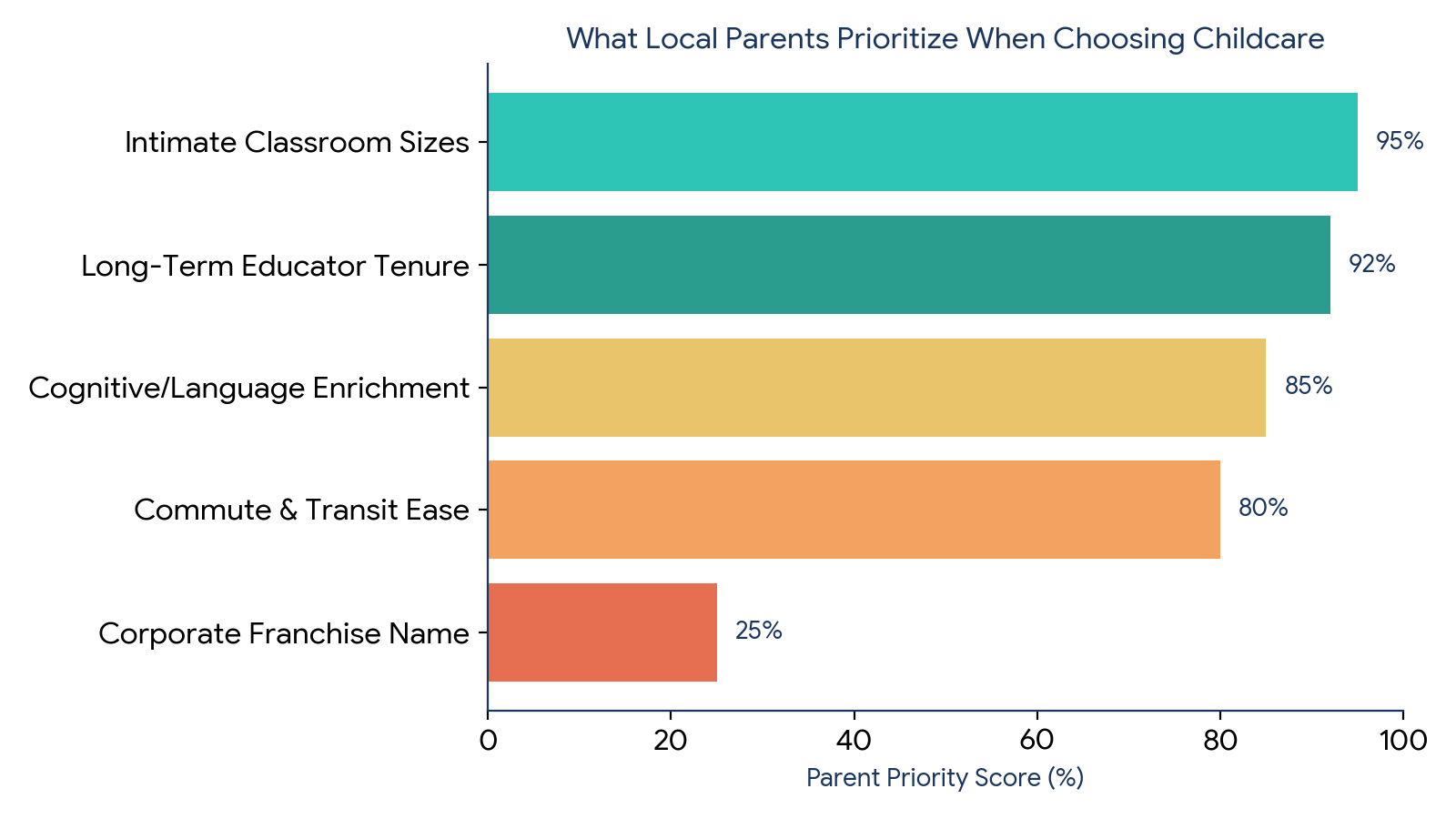
- Intimate Class Sizes for Sensory Regulation: Avoid overcrowded, high-capacity centers to ensure your child receives highly personalized attention and a lower stress environment.
- Educator Tenure for Secure Attachment: Look for centers with high staff retention rates (like 7+ years) to provide critical emotional stability and consistent attachment for your child.
- Cognitive Enrichment: Prioritize programs that natively integrate multi-language exposure (like Spanish and Ukrainian) and movement into the daily curriculum without extra fees and without feeling like forced “lessons.”
- Holistic Nutrition for Brain-Gut Connection: Ensure the center provides fresh, organic meals daily, avoiding fried foods and prioritizing brain-building nutrition for balanced energy required for neurodevelopment and emotional regulation.
- Commute Integration for Parental Co-Regulation: Choose a location positioned seamlessly along your morning transit route, like the Chicago Ave CTA, to minimize morning friction.
Touring facilities can quickly become a blur of bright colors, playground equipment, and rehearsed talking points. However, the glossy aesthetics of a building do not dictate the quality of care happening inside. To ensure your child truly thrives, local Chicago parents need to look past the surface-level marketing and examine the less obvious, deeply psychological, and holistic factors that shape early childhood development.
What Are the Most Important Factors When Touring a Daycare?
When you step into a facility for a tour, your focus should immediately shift from the physical toys to the human interactions and foundational policies. The environment you choose will profoundly shape your child's early psychological framework, as the brain undergoes rapid, sensitive neuroplasticity in the first five years of life. Here is what truly matters.
Factor 1: Intimate Group Sizes vs. High Capacity
In dense neighborhoods like River West and Wicker Park, some corporate centers operate with capacities nearing 100 children. While these massive facilities might look impressive and offer extensive amenities, they can often feel chaotic, noisy, and overwhelming for an anxious toddler.
From a psychological standpoint, chronic overstimulation elevates a child’s cortisol (stress hormone) levels. When a child's nervous system is constantly in a state of low-grade "fight or flight" due to noise and chaos, their brain cannot dedicate resources to deep learning, creative play, or emotional self-regulation. Intimate classroom sizes and strict lower capacities guarantee a calmer, more regulated environment where your child is truly seen and heard, rather than getting lost in the crowd or overstimulated by constant noise.
Factor 2: Educator Tenure and Caregiver Stability
High teacher turnover is the hidden crisis of the childcare industry, particularly within massive national franchises. From a psychological perspective, consistent caregiving is paramount for young children. To a young child, the world is understood through their relationships with primary caregivers. This concept, rooted in Bowlby’s Attachment Theory, dictates that children need a "secure base" or a trusted, consistent adult, in order to feel safe enough to explore their surroundings
If a center cannot retain its staff, your child will constantly face the emotional stress of adjusting to strangers, hindering their ability to form secure attachments. Always ask the director about average staff tenure. A center where educators stay for years is the ultimate indicator of a healthy, supportive ecosystem. Consistent caregiving provides the deep emotional anchor your child needs to build resilience, confidence, and strong social skills with their peers
Factor 3: Integrated Cognitive Enrichment
Many daycares treat essential cognitive development like a luxury add-on. They will charge extra for "special" language, music, or yoga classes. However, developmental psychology shows that young children learn best not through formal "instruction," but through immersive, play-based experiences. Look for environments where multilingual exposure and guided physical movement naturally flow through the day's play.
The best centers build these directly into their foundational curriculum. Immersive experiences like daily yoga movements to build core physical strength and emotional self-regulation, or learning through multiple languages to enhance executive functioning should be a standard part of your child's day, not an upsell. Early exposure to music and rhythm also aids in auditory discrimination and fine motor control.
Factor 4: Nutritional Standards for Growing Brains
Nutrition is inextricably linked to cognitive development, focus, and behavior in early childhood, a connection known as the brain-gut axis. Many legacy centers and large franchises rely heavily on highly processed, fried foods and sugar-laden snacks because they are cost-effective and easy to prepare at scale. However, these foods cause rapid blood sugar spikes followed by steep crashes, leading directly to afternoon meltdowns, emotional dysregulation, and an inability to concentrate.
When evaluating a center, prioritize those that offer fresh, holistic, and organic nutrition prepared daily. Eliminating fried foods and focusing on brain-building macronutrients ensures your child maintains stable energy levels, empowering them to engage positively in afternoon activities and return home to you happy and balanced.
Factor 5: The Hidden Impact of Your Commute on Morning Co-Regulation
We often think of the daycare commute purely as a logistical challenge for the parent, but it has a profound psychological impact on the child. Children are masterful at reading their parents' energy, it’s a process called emotional co-regulation. If your morning drive requires you to fight gridlock traffic in the opposite direction of your workplace, your child will absorb that hurried, tense, and frustrated energy in the backseat.
By the time you arrive at the center, the child is already dysregulated, making the separation process tearful and highly stressful. Your daycare choice should ideally be geographically frictionless. If you live in Wicker Park but commute downtown, securing childcare near Chicago Ave CTA or naturally along your West Loop driving route reduces this daily friction. A smooth, predictable, and calm commute allows you to arrive at the center relaxed, giving you the emotional bandwidth to warmly transition your child into the arms of their teacher.
What Are Common Mistakes Parents Make When Choosing Childcare?
The biggest mistake parents make is assuming that older, "veteran" chain facilities automatically offer superior care. While longevity is great, some legacy centers have failed to update their environments, curriculum, or communication methods to match modern early childhood science. Do not choose a center just because it is a familiar neighborhood name. Look deeper to see if they offer a modern, intelligent learning environment that actively invests in the continuous education and well-being of its teachers.
Another common pitfall is being swayed by expansive, mall-like facilities. While indoor gymnasiums and vast hallways look great on a brochure, remember that a toddler's perspective is entirely different. What looks like a grand facility to an adult can feel overwhelmingly large and deeply impersonal to a two-year-old who craves closeness, soft lighting, and quiet corners.
The Psychological Impact of Your Daycare Choice
The daycare environment you choose will profoundly shape your child's early psychological development. The brain undergoes rapid neuroplasticity in the first five years of life. A chaotic, high-turnover environment can lead to elevated cortisol (stress hormone) levels, which can impede learning and emotional regulation. Conversely, a stable, intimate environment with consistent, nurturing caregivers fosters secure attachment. Securely attached children are more likely to explore their environment confidently, develop resilience, and exhibit better social skills with their peers.
How iLearn Center Supports West Town & Wicker Park Families
At iLearn Center, we provide a premium alternative to high-capacity corporate franchises and dated neighborhood chains. We purposely maintain intimate class sizes so that whether you need Wicker Park infant care or toddler preschool, your child receives dedicated, individualized nurturing in a calm, regulated setting.
Our West Town campus offers a deeply immersive bilingual environment where our tenured early childhood educators seamlessly weave English, Ukrainian, and Spanish into daily play and music. We also prioritize your child's physical well-being with fresh organic nutrition prepared daily with no fried foods, and weekly guided yoga sessions tailored to early motor development. Furthermore, our 80%+ staff retention rate (with many teachers staying 7+ years) ensures your child builds deep, long-lasting emotional bonds. Conveniently located for families needing childcare near Chicago Ave CTA, our modern facility is designed to make both your child’s development and your morning commute completely frictionless.
Frequently Asked Questions About Chicago Childcare
How far in advance should I start looking for daycare in West Town?
Because of high demand and lower capacities at premium centers, it is highly recommended to start touring and join waitlists at least 6 to 9 months before your desired start date, especially for infant care.
What questions should I ask the center director during a tour?
Always ask: What is your teacher turnover rate? How do you handle daily parent communication? What are your nutritional standards for daily meals? And are enrichment programs (like language or music) included in the base tuition, or are they extra?
How Can You Schedule a Tour to Explore iLearn Center?
Ready to find the perfect educational home for your child? Skip the wait and schedule an in-person daycare tour of our West Town location today to see our intimate, multilingual classrooms in action!
Get in Touch & Schedule
Your Visit

Chicago, IL 60614Tel: 773-360-7702Email: anastasiia@ilearncenter.com
7:00 AM – 6:30 PM
Chicago, IL 60622Tel: 312-888-9983Email: olha@ilearncenter.com
6:30 AM – 6:30 PM
Chicago, IL 60612Tel: 773-312-3570Email: Sandra@ilearncenter.com
6:30 AM – 6:30 PM