Navigating Daycare with Food Allergies: How iLearn Safely Accommodates Special Diets
Sending a child with severe food allergies or special dietary needs to daycare is a major source of anxiety for parents. Our latest guide breaks down what true food safety looks like beyond a standard "nut-free" policy.
October 31, 2026

Handing your child over to a daycare is an emotional transition for any parent. But when your child has a severe food allergy or requires a highly specialized diet, that standard nervousness is often replaced by genuine fear. You are not just trusting an educator to nurture your child’s mind; you are trusting them with your child’s physical safety.
Quick Answer: How Does iLearn Center Handle Food Allergies and Special Diets?
- Strict Facility Protocols: We operate safe environments with rigorous ingredient vetting and cross-contamination prevention strategies.
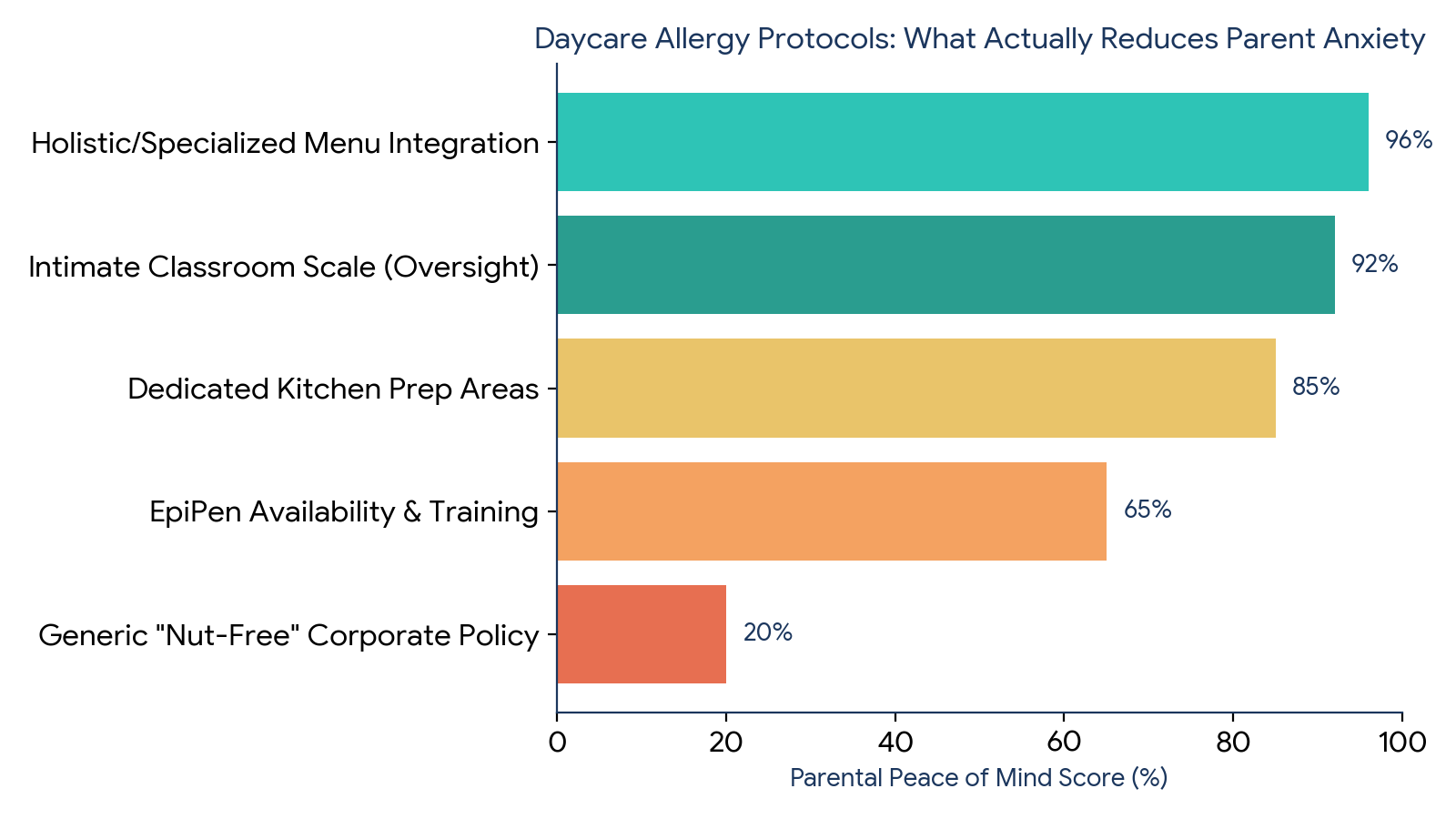
- Intimate Classroom Oversight: Our strict low capacities ensure educators have eyes on every child during meals, eliminating the chaos of massive cafeterias.
- Customized Dietary Accommodations: We seamlessly integrate dairy-free, grain-free, and strictly sugar-free regimens into your child’s day without singling them out.
- Emergency Preparedness: Our tenured staff are comprehensively trained in allergy recognition, anaphylaxis response, and EpiPen administration.
- Holistic Brain Nutrition: We view safe food not just as a liability to manage, but as a critical tool for cognitive development and emotional regulation.
If you are touring daycares in Chicago, you have likely seen the generic "Nut-Free Zone" signs on front doors. However, true dietary safety requires much more than a corporate policy. It requires a foundational culture of awareness, intimate oversight, and a deep understanding of how holistic nutrition drives early childhood development.
The Psychological Toll of Food Allergies on Parents
To understand what makes a childcare center truly safe, we must first acknowledge the psychological burden carried by allergy parents. Managing a child’s food allergy is a 24/7 job that induces high levels of chronic stress. You read every label, you interrogate restaurant staff, and you constantly scan environments for hidden threats.
When transitioning to daycare, that loss of control can be overwhelming. This anxiety is often exacerbated by massive, high-capacity daycares. In facilities nearing capacities of 90 to 100 children, information inherently gets lost in the crowd. A substitute teacher might not know that your toddler is severely allergic to sesame, or the sheer volume of children makes it impossible to monitor every lunchbox for cross-contamination. This is why the size and intimacy of a daycare center is the single most critical, yet frequently overlooked, factor in allergy management.
Why Intimate Class Sizes Save Lives
At iLearn Center, we intentionally maintain low capacities and intimate classroom sizes across our Lincoln Park, West Town, and Grand & Leavitt locations. In smaller settings, educators intimately know every single child's specific needs, dietary restrictions, and behavioral baselines. During meal and snack times, smaller ratios mean that teachers can actively supervise eating, preventing the accidental food-sharing that frequently occurs in overcrowded rooms.
Unlike large corporate franchises where rigid national policies overshadow individual care, our privately-owned centers empower our educators to build deep, familiar relationships with every family. Furthermore, our high staff retention rate ensures that the educators caring for your child are deeply familiar with their unique health profile, creating an unbroken chain of trust and safety.
Why Nutrition is Critical for Early Cognitive Development
When discussing special diets, the conversation often revolves purely around avoiding allergens. However, while veteran legacy chains might rely on outdated 1990s nutritional guidelines focused solely on "what not to eat," modern neurodevelopmental science requires us to focus on what we are actively feeding the developing brain. The first five years of life are characterized by explosive neuroplasticity. The brain requires high-quality, dense nutrition to build neural pathways, regulate mood, and sustain focus.
The Brain-Gut Axis in Early Childhood
The connection between the digestive system and the brain (the brain-gut axis) is a heavily researched area of developmental psychology. A child’s gut microbiome directly influences their production of neurotransmitters like serotonin and dopamine. When a child consumes heavily processed, fried, or sugar-laden foods, it causes rapid spikes and crashes in blood sugar. This leads directly to afternoon meltdowns, hyperactivity, and an inability to self-regulate.
Conversely, a holistic diet rich in complex macronutrients stabilizes energy levels. This allows children to engage in deep, cognitive play and fully absorb the bilingual immersion programs we offer without feeling fatigued or emotionally dysregulated.
Accommodating Advanced Special Diets
At iLearn, we understand that "special diets" go far beyond traditional peanut allergies. Many families choose specific nutritional paths to optimize their child's health or manage autoimmune sensitivities. We are fully equipped to accommodate and respect these choices.
For example, if your family follows a grain-free, dairy-free, or strictly sugar-free regimen, our staff seamlessly integrates these requirements. We understand the importance of utilizing clean proteins, healthy fats like ghee, and avoiding processed additives. By replacing refined sugars with natural alternatives (like stevia or fruit) and utilizing specific low-FODMAP ingredients when requested, we ensure your child receives brain-building nutrition without compromising their gut health. Importantly, our educators manage these custom meals with deep empathy, ensuring your child never feels "left out" or ostracized during communal snack times.
The iLearn Center Protocol: How We Keep Your Child Safe
Trust is earned through action and transparency. Here is exactly how we protect children with severe food allergies and specialized diets at our Chicago locations.
1. Meticulous Cross-Contamination Prevention
A crumb is all it takes for a severe allergic reaction. We implement rigorous sanitization protocols before and after every meal. Surfaces are thoroughly disinfected, and children are guided through mandatory hand-washing routines before sitting down to eat and immediately after finishing. This physical barrier prevents allergen traces from migrating to shared toys or play surfaces.
2. Individualized Meal Management
For children with severe allergies or strict dietary regimens (such as a dedicated dairy-free or grain-free plan), meals are carefully managed and monitored. Educators cross-check all items and sit closely with children during eating periods. We foster a culture of respect among the children, teaching even our toddlers the importance of eating only their own food to keep their friends safe.
3. Comprehensive Emergency Response Training
Prevention is our primary goal, but preparedness is our guarantee. Every tenured educator at iLearn Center is thoroughly trained in recognizing the early, sometimes subtle signs of an allergic reaction or anaphylaxis. Staff are certified in CPR and the immediate, correct administration of epinephrine auto-injectors (EpiPens). Emergency action plans are explicitly documented, easily accessible, and regularly reviewed by our team.
Questions to Ask Any Daycare About Food Safety
If you are evaluating childcare options in West Town, Lincoln Park, or near Grand & Leavitt, do not settle for a surface-level answer about food safety. To ensure your child's well-being, ask the center director these specific questions during your tour:
- What is your exact protocol if a child accidentally ingests an allergen?
- How do you manage cross-contamination during communal meal times?
- Can you accommodate complex, holistic diets (like grain-free or dairy-free) without making the child feel excluded?
- What is your teacher turnover rate? (Remember: high turnover means new, unfamiliar people constantly managing your child’s life-saving dietary protocols).
Frequently Asked Questions
Can you accommodate a strictly dairy-free and sugar-free diet?
Yes. We regularly accommodate advanced nutritional profiles, including dairy-free, grain-free, and zero-refined-sugar diets. We believe in providing holistic, brain-boosting nutrition that aligns with your family’s specific health philosophies.
Are teachers trained to use an EpiPen?
Absolutely. All of our educators undergo rigorous training on how to recognize the signs of anaphylaxis and how to swiftly and correctly administer an EpiPen in an emergency.
How do you ensure my child doesn’t eat another child’s food?
Our intimate class sizes and low ratios allow our educators to actively supervise every meal. Children are taught boundary respect, and high-risk foods are closely monitored to prevent any accidental sharing.
Schedule a Tour to Explore iLearn Center Instantly
You deserve to drop your child off in the morning with total peace of mind, knowing their physical health and cognitive development are in the safest possible hands. We invite you to experience our warm, meticulous, and holistic environment for yourself.
Contact us to schedule an in-person tour at your nearest iLearn Center location by sending us a message. Come discuss how we can perfectly accommodate your child’s unique dietary needs.
Get in Touch & Schedule
Your Visit

Chicago, IL 60614Tel: 773-360-7702Email: anastasiia@ilearncenter.com
7:00 AM – 6:30 PM
Chicago, IL 60622Tel: 312-888-9983Email: olha@ilearncenter.com
6:30 AM – 6:30 PM
Chicago, IL 60612Tel: 773-312-3570Email: Sandra@ilearncenter.com
6:30 AM – 6:30 PM